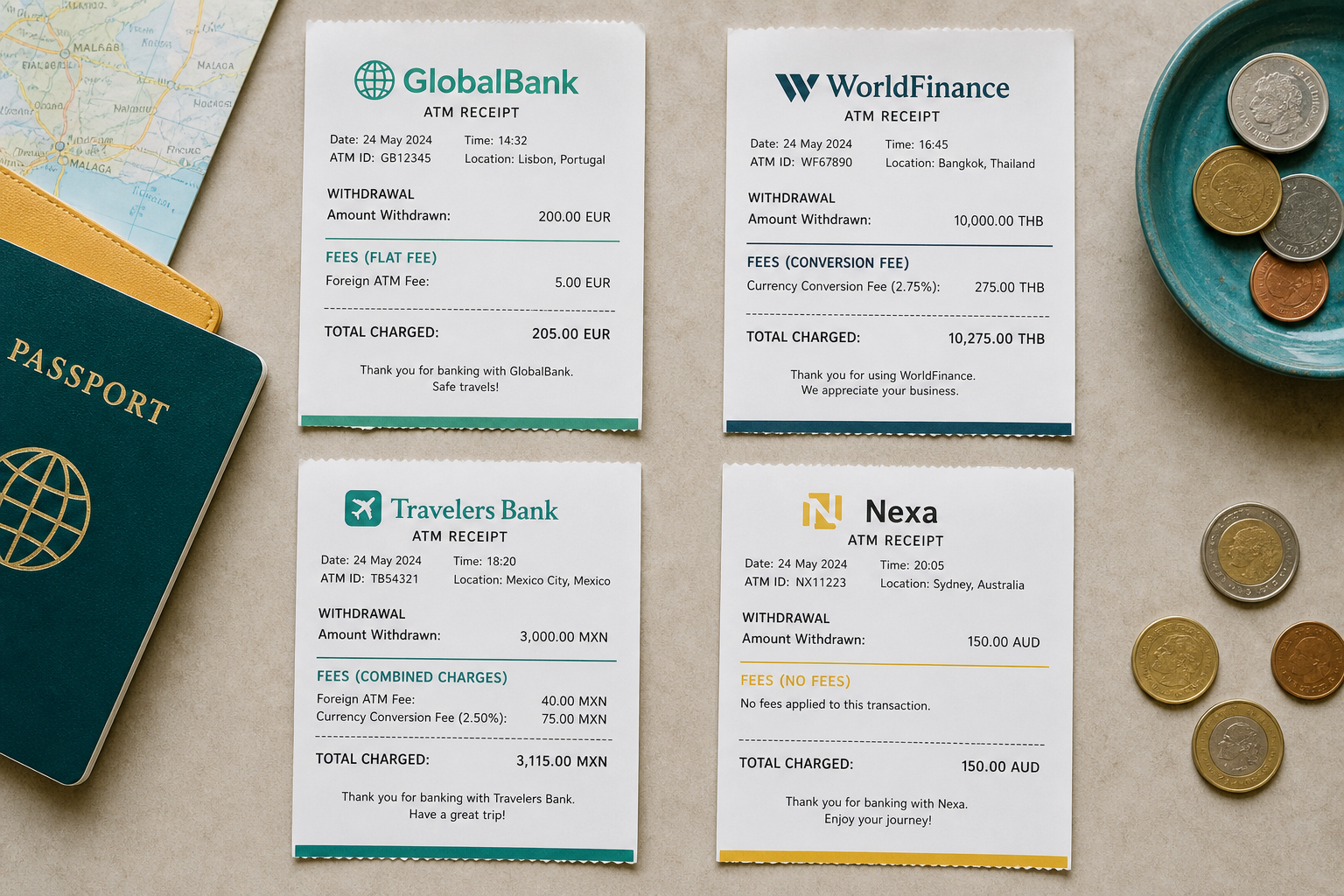
Where You Withdraw Cash Abroad Matters More Than You Think
You land in a new city, tired from the flight, and spot an ATM in the arrivals hall. Convenient, right? That quick withdrawal just cost you $10 in fees, plus a terrible exchange rate. Meanwhile, your Airbnb host withdraws from the same bank network at a branch fifteen minutes away and pays nothing.
ATM fees aren’t random. They’re carefully engineered around who’s desperate, who’s confused, and who has alternatives. Understanding the pattern saves you real money and reveals something fascinating about tourist economics.
The Airport Arrival Tax
Airport ATMs charge flat fees of $8 to $12 per withdrawal because they can. You just landed, you need local currency for the taxi or train, and you’re not about to haul your luggage back through security to find a better option.
This is extraction economics at its clearest. The operators know you’re captive. They know you need cash now. They price accordingly.
The smarter play? Carry enough home currency to get you into the city, or use a card that reimburses ATM fees globally. Those $10 fees add up fast if you’re making multiple withdrawals.
Tourist District Currency Confusion
ATMs in heavily touristed areas often present you with a helpful option: withdraw in your home currency instead of the local one. Seems convenient. It’s actually a trap.
This is called dynamic currency conversion, and it typically costs you 3% to 5% on top of whatever fee you’re already paying. The exchange rate is terrible, but it’s presented as a service. “Would you like to see the amount in dollars?” sounds friendly. What they’re really asking is whether you’ll accept a punishing markup.
Always, always decline. Choose to be charged in the local currency. Your bank’s exchange rate will beat the ATM’s conversion every single time.
These machines cluster in tourist zones because that’s where confused travelers make expensive mistakes. The operators profit from your uncertainty about exchange rates and your desire for familiar numbers.
Residential Neighborhood Reality
Walk ten minutes away from the tourist core into a residential neighborhood, find a bank ATM, and suddenly the fees disappear. If you’re on a major network like Visa or Mastercard, you’ll often pay nothing beyond your own bank’s charges.
Why the difference? Locals use these machines. Locals vote. Predatory fees on neighborhood ATMs create political pressure that airport and tourist-district operators never face.
This is where you should be withdrawing your cash. Yes, it takes a bit more effort. Yes, you might need to pull up Google Maps and walk a few blocks. The savings are worth it, especially if you’re withdrawing larger amounts to minimize transaction frequency.
Finding the Good ATMs
Look for these indicators:
- Bank branches in residential areas, not standalone machines
- ATMs where you see locals lined up, not just tourists
- Machines inside bank lobbies rather than on busy pedestrian streets
- Networks affiliated with major international banking partnerships
A fifteen-minute walk from your hotel into a normal neighborhood usually does the trick.
Border Town Double Extraction
Cross an international border by land, and you’ll often find ATMs that impose both fixed fees and conversion markups. Geographic monopoly lets operators charge whatever they want.
You’re between countries, you need the new currency, and there’s literally nowhere else to go. They know it. You know it. The fees reflect that reality.
In these situations, your best strategy depends on the specific border and currencies involved. Sometimes it’s worth withdrawing a larger amount to minimize the per-transaction damage. Sometimes it’s better to use a card for initial purchases and wait until you reach a proper town.
Border ATMs are the clearest example of extraction economics in action. There’s no pretense here, just pure geographic leverage.
What This Tells You About Travel Economics
ATM fee structures map perfectly onto tourist vulnerability. The fees spike exactly where you’re most desperate (airport arrivals), most confused (tourist districts with currency conversion), or most trapped (border crossings). They disappear where locals have power (residential neighborhoods).
This pattern repeats across almost every destination. The specifics vary, but the logic stays consistent.
Understanding this helps you plan smarter. Build your cash strategy before you travel. Know where you’ll withdraw, how much you’ll take out at once, and which offers to decline. Small decisions about ATMs add up to significant savings over a two-week trip.
Your Cash Withdrawal Strategy
Here’s what works:
- Skip the airport ATMs unless you have fee reimbursement
- Carry enough home currency to reach your accommodation
- Always decline dynamic currency conversion, no matter how helpful it sounds
- Find a residential bank branch within a day of arriving
- Withdraw larger amounts less frequently to minimize transaction fees
- At borders, assess whether to wait or accept the extraction tax
ATM fees seem like a minor travel detail, but they’re actually a perfect window into how tourist infrastructure extracts value based on your level of desperation and knowledge. Now you know the pattern. Use it to keep more of your money for the experiences that actually matter.