What Restaurant Menu Covers Tell You About What Actually Stays on the Menu
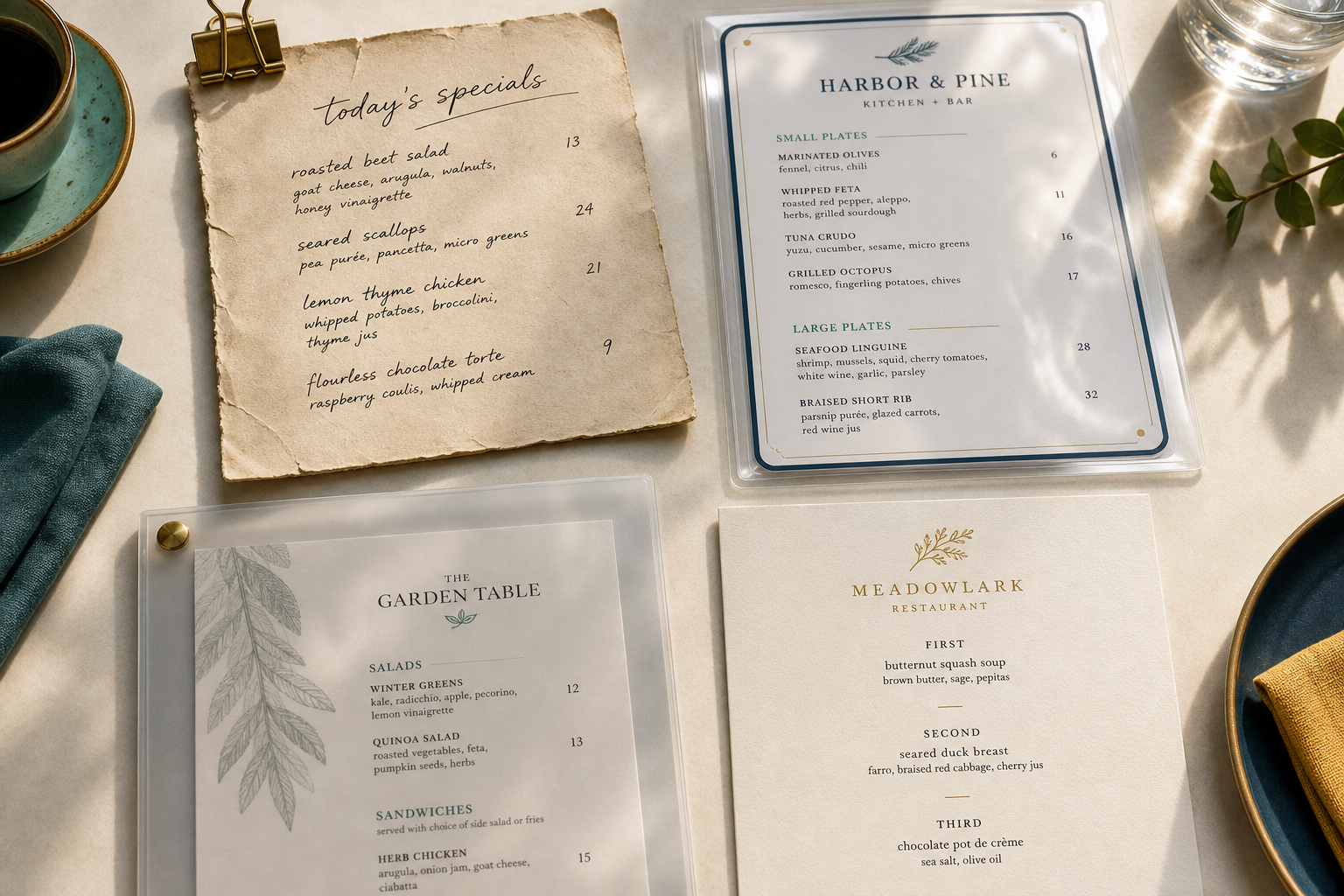
You’re scanning a menu in a trattoria outside Florence, and the day’s specials are scrawled on a plain paper insert, no lamination, just clipped in. Meanwhile, the core menu sits protected behind plastic. Walk into a diner in Ohio, and every single item, from the permanent pancakes to today’s soup, lives inside the same wipe-clean shield. Why does one restaurant protect everything while another leaves half its offerings exposed to coffee spills and tomato sauce?
The answer isn’t about budget or aesthetics. It’s about what the kitchen expects to serve tomorrow, next week, and next month. Menu protection styles reveal a restaurant’s relationship with consistency, seasonality, and improvisation. Once you know what to look for, those plastic sleeves and paper inserts become a decoder ring for how often dishes actually change and whether that “special” is genuinely special or just printed smaller.
Italian Trattorias: Paper Inserts Signal Real Daily Rotation
Walk into a traditional Italian trattoria and you’ll often find a laminated core menu listing pastas, secondi, and house staples. But the daily specials? Those arrive on unprotected paper inserts, sometimes handwritten, clipped or tucked into the menu without ceremony.
This isn’t carelessness. It’s a signal that these dishes exist only as long as the ingredients do. The kitchen bought what looked good at the morning market. When the artichokes are gone, that carciofi dish disappears until next season. Paper inserts are cheap to print and easy to swap out, which means the restaurant expects to replace them constantly.
For you as a traveler, this means: order the unprotected specials first. They represent what’s actually fresh and seasonal. The laminated section holds the reliable standards, but the paper insert is where the kitchen shows off what arrived this morning.
American Diners: Full Plastic Protection Means Forever Menus
American diners and many casual restaurants take the opposite approach. Everything gets laminated or sealed in plastic. The breakfast menu, the burger selection, the specials board (if it exists), all protected equally.
This tells you the menu barely changes. Those wipe-clean surfaces exist because the same bacon and eggs will be ordered, spilled on, and wiped down thousands of times. The protection isn’t about preserving something temporary. It’s about making something permanent survive heavy use.
The upside? You can return six months later and find exactly what you loved. The downside? “Chef’s special” often just means a regular menu item the restaurant wants to move, not something the kitchen invented this week. The plastic says: we’ve committed to these dishes long-term, and we’ve built our supply chain and kitchen systems around repeating them endlessly.
Japanese Izakayas: Partial Sleeves Balance Stability and Seasons
Many Japanese izakayas and casual restaurants use a hybrid system: core menu items sit in protective sleeves, but those sleeves have open tops or sides that allow seasonal pages to slide in and out without removing the whole menu from its cover.
This design reflects a kitchen that respects both consistency and seasonality. The protected core might include yakitori standards, rice dishes, and year-round offerings. The swappable inserts feature seasonal fish, vegetables at peak freshness, or limited-time collaborations with specific suppliers.
What this means for your meal: the protected pages are safe bets, dishes the restaurant has perfected and will serve identically next month. The loose inserts are where you find what’s special right now. It’s a menu structure that says, “We have our standards, but we also respond to what’s available and excellent today.”
French Bistros: Wine Gets Plastic, Food Stays Bare
Classic French bistros often laminate their wine lists while leaving food menus unprotected. Sometimes the wine list lives in a heavy plastic binder while the food menu arrives as a simple printed card.
The logic is straightforward: wine inventory is relatively stable (bottles sit in the cave for months or years), but the food menu rotates with market seasons and the chef’s inspiration. Protecting the wine list makes sense because it changes slowly. Leaving the food menu bare acknowledges that it will be reprinted regularly as dishes come and go.
For travelers, this split tells you where to find consistency versus discovery. The wine list is curated for the long term. Ask about older vintages or house recommendations, the staff knows these bottles intimately. The food menu, however, is more fluid. What you see today might shift next week, especially if you’re dining during a seasonal transition.
What Menu Protection Tells You Before You Order
Once you start noticing these patterns, you can read a menu’s protection style like a preview of the kitchen’s philosophy:
- Fully laminated menus suggest consistency and repeatability. Great for finding a favorite and returning to it, less exciting for seasonal discovery.
- Unprotected inserts or pages indicate real rotation. These items are temporary by design, which usually means they’re tied to ingredient availability.
- Partial protection or removable pages show a kitchen that balances both approaches, worth asking staff which items are permanent versus seasonal.
- Different protection for different sections (like wine versus food) reveals what the restaurant considers stable versus flexible.
Why This Matters for Your Travel Planning
Understanding menu protection helps you set realistic expectations and make smarter choices. If you fall in love with a dish at a restaurant with paper inserts, you know to enjoy it now because it might not exist next visit. If you’re hunting for seasonal specialties, skip the fully plastic-wrapped menus and look for places with visible paper additions or loose pages.
It also helps you decode “specials.” A special written on an unprotected insert at an Italian trattoria is genuinely special, limited by ingredient availability. A special printed on the same laminated page as everything else at an American chain is just marketing, not a reflection of what’s fresh today.
Next time you sit down at a restaurant abroad, take a second to notice how the menu is protected before you read what’s on it. Those plastic sleeves, paper clips, and bare pages are telling you exactly what kind of kitchen you’re dealing with and what you can expect to find when you return.