What Museum Audio Guide Numbers Really Tell You About How to Visit
You pick up the audio guide at the museum entrance, glance at the keypad, and see numbers everywhere. Some museums hand you a sleek device with numbers 1 through 47 in strict order. Others give you a laminated card with codes like “G-3” and “S-12” scattered across different galleries. A few offer multiple number sequences in different colors. What’s going on?
Those numbers aren’t random. They reveal the museum’s entire philosophy about how you should experience their collection. And once you understand the system, you’ll know exactly whether to follow the route religiously or chart your own course.
The French Chronological Flow
Walk into most French museums and you’ll get an audio guide numbered sequentially from 1 to whatever. Number 1 sits near the entrance. Number 2 is in the next logical spot. Number 47 waits somewhere near the exit.
This isn’t convenience. It’s curation as narrative.
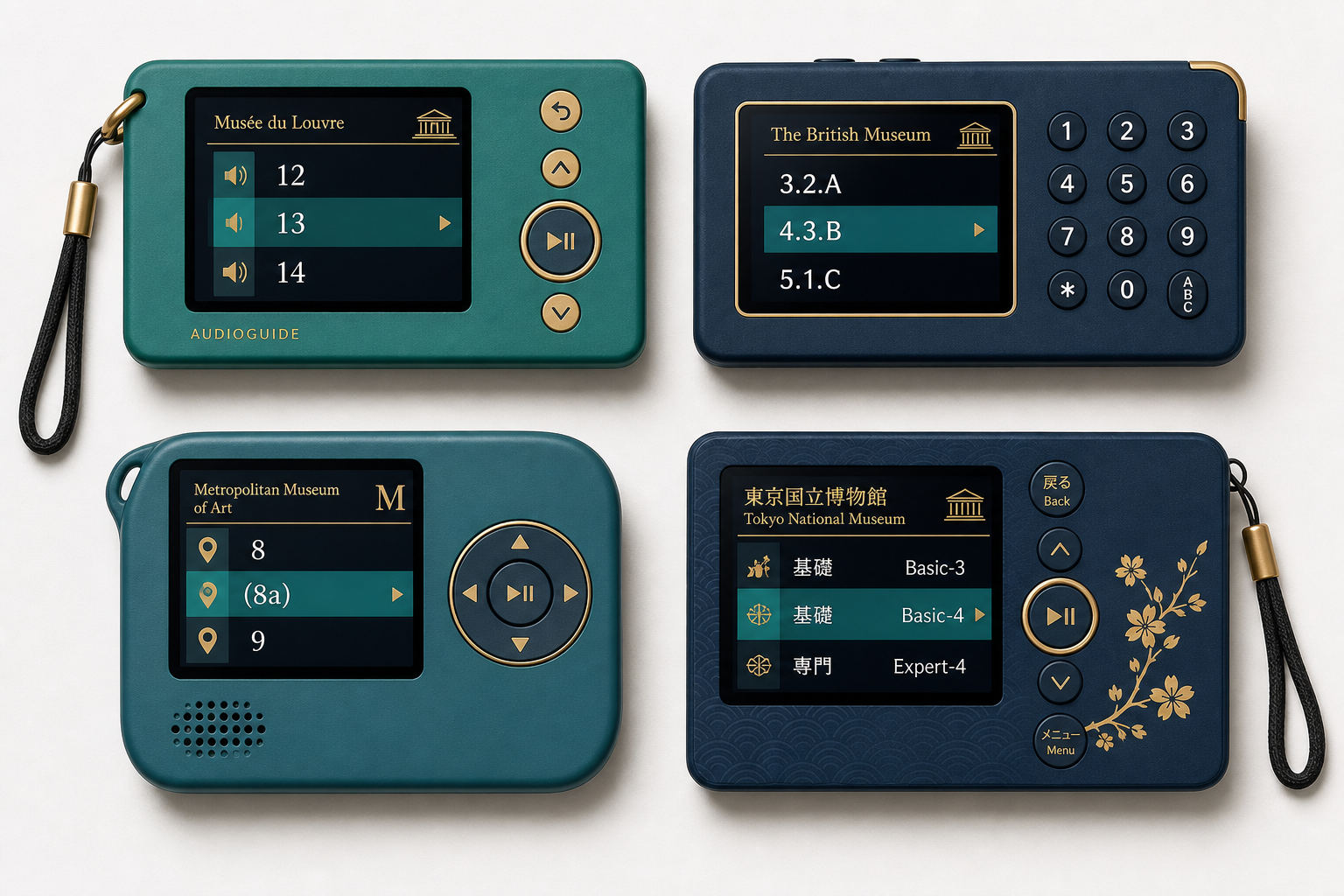
French museums typically assign numbers chronologically by room entry, assuming you want a linear story through history or artistic movements. The Louvre’s Egyptian wing doesn’t just display artifacts. It walks you through dynasties in order. The Musée d’Orsay guides you from early Impressionism through Post-Impressionism with numbers that build a thesis about art history.
What this means for you: Follow the numbers in order, at least on your first visit. The museum designed a story arc. Skipping from 3 to 28 breaks the narrative thread they spent years constructing. If you’re short on time, ask which numbered sequence covers your priority period, then do that section completely rather than sampling randomly.
British Object-Specific Codes
British institutions take the opposite approach. At the British Museum or the V&A, you’ll get codes like “Room 4, Case B, Object 7” or simply alphanumeric tags scattered across galleries with no implied sequence.
This system assumes you know what you want to see. You came for the Rosetta Stone? Here’s its code. Interested in medieval manuscripts? Different room, different code series. The numbering allows random access because the curation philosophy trusts visitor autonomy.
You choose your own journey. The museum provides deep information about individual objects but doesn’t presume to know your interests or ideal route.
What this means for you: Do your homework before you arrive. Look up the museum’s highlights or your specific interests, note the codes, and plot your own route. The audio guide becomes a reference tool, not a tour leader. Skip around freely. That’s exactly what the system expects.
American Suggested Routes With Optional Detours
American museums often split the difference. You’ll see numbers in bold (the suggested main route) plus additional numbers in parentheses or different colors (optional detours for specialists or curious visitors).
The Met might give you stops 1-20 as the “greatest hits” route through a wing, with stops 21-35 available if you want deeper dives into specific artists or periods. SFMOMA often uses this approach for temporary exhibitions, offering a 30-minute route and a 90-minute comprehensive option.
This balances structure and freedom. The museum acknowledges that some visitors want guidance while others crave depth. The numbering accommodates both.
What this means for you: Start with the bold numbers if you’re new to the subject or short on time. Circle back for parenthetical stops if something catches your interest. Think of bold numbers as the essential narrative and optional numbers as footnotes you can explore when curious.
Japanese Expertise Tracks
Japanese galleries pioneered something different: separate number sequences for different knowledge levels. You might get a green-numbered beginner track (15 stops, broad context), a blue-numbered intermediate track (30 stops, more detail), and a red-numbered scholar track (60+ stops, deep technical analysis).
This acknowledges that beginners and experts need fundamentally different experiences. A first-time visitor to a ceramics museum needs “this is porcelain, here’s why it matters.” A pottery student needs glaze chemistry and kiln temperature discussions.
The same object might appear in all three tracks but with commentary pitched to different expertise levels. Some objects only appear in advanced tracks because they require background knowledge to appreciate.
What this means for you: Be honest about your knowledge level and choose your track before you start. Don’t grab the expert track out of ambition if you lack foundation. You’ll miss the forest for the trees. Conversely, if you have genuine expertise, the beginner track will feel condescending. The system works beautifully when you self-select accurately.
Why This Matters for Your Museum Visits
Understanding these numbering philosophies transforms how you approach museums. You’ll know immediately whether the institution expects you to:
- Follow a carefully constructed narrative path (respect it)
- Explore based on personal interest (plan ahead)
- Choose between efficient highlights and deep exploration (decide your time budget first)
- Match commentary to your expertise (assess your knowledge honestly)
Next time you pick up an audio guide, look at the numbering system before you look at the art. It tells you exactly how the museum wants to be experienced. And once you know that, you can either follow their lead or deliberately chart your own course, but either way, you’re making an informed choice.
The numbers aren’t just wayfinding. They’re a philosophy of learning made visible.