Why Grocery Store Temperatures Differ Around the World and What It Means for Your Trip
You walk into a California supermarket in July and immediately regret wearing shorts. The dairy aisle hits you like a walk-in freezer, hovering around 34°F while outside it’s pushing 90. Fast forward to a market in Provence, and you’re browsing wheels of cheese in a section that feels barely cooler than the street. Same products, wildly different temperatures. What’s going on?
Grocery store refrigeration isn’t just about keeping food fresh. It’s a window into how different cultures think about food safety, risk, and what counts as “safe enough.” And if you’re traveling and planning to stock your rental kitchen or Airbnb, understanding these differences matters more than you’d think.
The American Deep Freeze: Liability Culture Meets Dairy
American supermarkets treat refrigeration like a legal shield. Walk through any dairy aisle and you’ll find temperatures hovering around 34°F, just barely above freezing. Stores crank the cold hard enough that you’ll see shoppers in summer clothes rubbing their arms, rushing through their milk and yogurt selections.
This isn’t about the food needing it. It’s about lawsuits. American liability culture means any hint of warmth becomes potential risk. If a product sits at 40°F instead of 34°F, that’s six degrees of potential courtroom trouble. So stores overchill everything, building in a buffer zone that would make an Arctic explorer comfortable.
For travelers, this means one thing: the products you buy are used to extreme cold. That butter you picked up will be fine on your counter for a few hours while you explore. It’s been living in what’s essentially a walk-in freezer.
Mediterranean Markets: Centuries of Survival Trump Temperature Paranoia
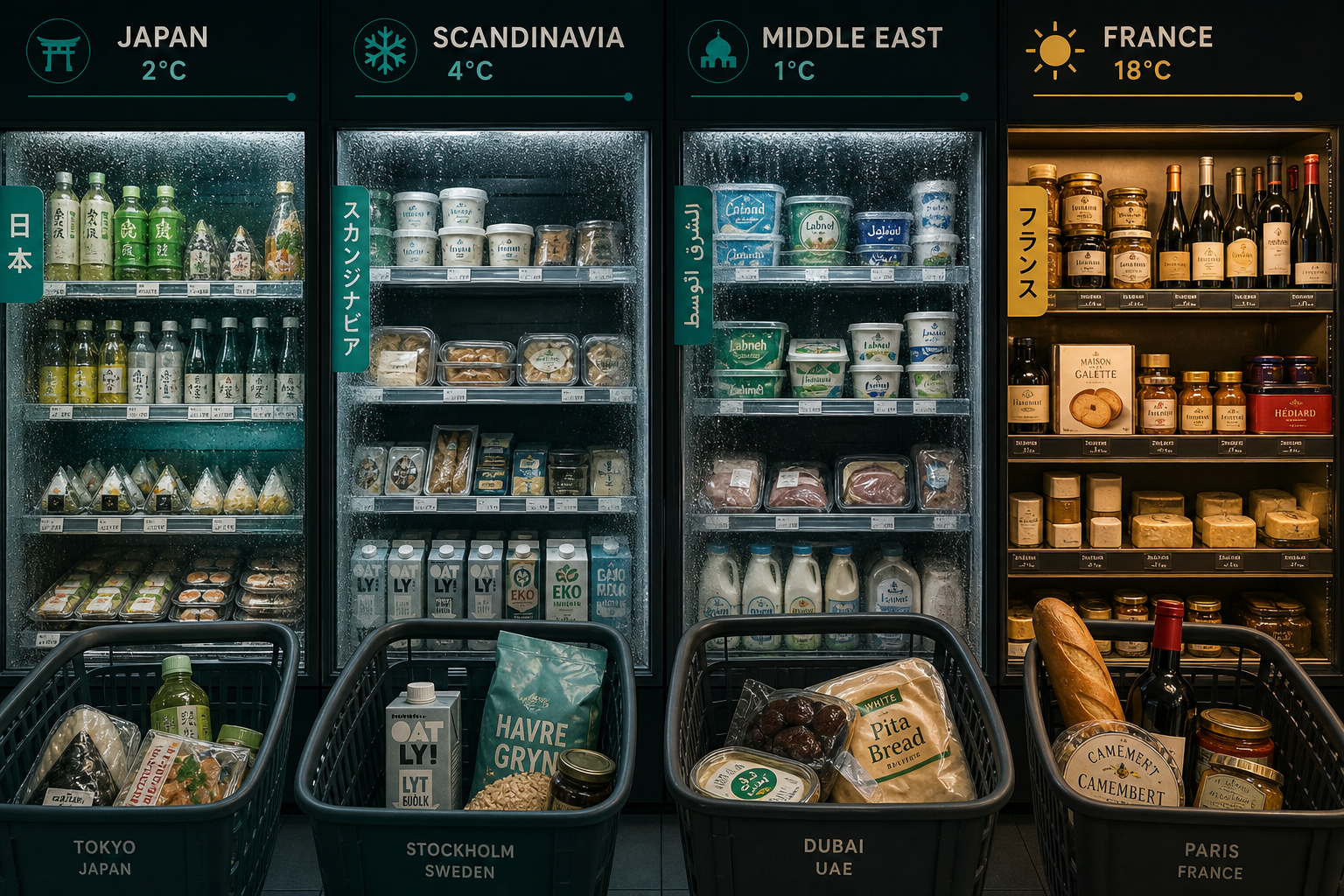
Land in Spain, Italy, or Greece, and the grocery store experience shifts entirely. Cheese sections sit at a relaxed 45°F, sometimes warmer. The refrigeration feels almost polite, like it’s there as a suggestion rather than a mandate.
This isn’t negligence. It’s confidence backed by centuries of evidence. These cultures made cheese, cured meats, and preserved foods long before electric refrigeration existed. The products are designed to survive. A wheel of Manchego or Parmigiano-Reggiano doesn’t panic at 45°F because it was literally invented to last through Mediterranean summers.
The practical takeaway? Those eggs you bought at the market don’t need to go straight into your rental’s fridge. European eggs aren’t washed the way American ones are, so they keep their protective coating. They’ll sit happily on your counter. Same with many cheeses and cured items. The local approach assumes resilience, not fragility.
Japanese Precision: Engineering Over Extremes
Step into a Japanese konbini (convenience store) and you’ll find something different entirely. The refrigerated cases run at exactly 38°F. Not 37, not 39. Staff check and log temperatures hourly. There are charts, records, systems.
Japan doesn’t go for American-style overcooling, but it doesn’t trust Mediterranean casualness either. The philosophy is precision. Consistency matters more than extremes. Food safety comes from controlling variables, maintaining exact conditions, and documenting everything.
This approach means Japanese refrigerated products expect stable conditions. That milk or tofu you bought assumes it will stay at 38°F until you use it. Plan accordingly. The engineering precision that keeps things perfect in the store means less built-in resilience for the chaos of travel.
Scandinavian Logic: Trust the Product, Not the Cold
Nordic co-ops and grocery stores take yet another approach. Root vegetables get minimal cooling. Potatoes, carrots, beets sit in sections barely cooler than room temperature. The preservation strategy relies on dryness and air circulation rather than aggressive refrigeration.
This reflects both environmental consciousness and trust in traditional storage methods. Why blast energy at products that kept fine in cellars for generations? The Scandinavian approach asks what actually needs cold versus what we’ve been conditioned to refrigerate out of habit.
For travelers stocking a rental kitchen, this is liberating information. Those root vegetables, onions, and hardy produce don’t need precious fridge space. They’re fine in a cool, dry spot, just like they’ve been for centuries.
What This Means for Your Shopping Strategy
Understanding local refrigeration philosophy helps you shop smarter abroad. Here’s what to remember:
- In the US, products are over-chilled and can handle brief warmth better than you’d think
- In Mediterranean markets, trust the traditional products to be resilient (especially cheese, cured meats, and unwashed eggs)
- In Japan, maintain the precision the products expect or consume them quickly
- In Scandinavia, don’t waste fridge space on what doesn’t need it
The Bigger Picture
Grocery store temperatures reveal how cultures balance food safety with tradition, lawsuit fear with common sense, engineering with environmental impact. They show you whether a place assumes food is fragile or resilient, whether safety comes from extreme measures or time-tested methods.
Next time you’re shopping abroad, pay attention to how cold (or not) those aisles feel. It’s not just about comfort. It’s intelligence about how to handle your groceries, what needs refrigeration, and what’s been engineered to survive exactly the kind of casual treatment you’ll give it while traveling.
That knowledge turns a simple grocery run into insight about where you are and how to live like the locals do, even if it’s just for a week.