What Airport Gate Seating Reveals About Boarding Culture
You’ve just cleared security in a new airport. Your gate is posted, departure time confirmed. You walk up and scan the seating area, looking for a spot to wait. But here’s something you’ve probably never consciously noticed: the chairs aren’t arranged the same way everywhere you travel.
Gate seating orientation isn’t random. It’s a deliberate choice that reveals how each airport expects you to behave during boarding. Once you understand the pattern, you’ll know exactly where to sit and what to watch for, no matter where you’re flying.
American Gates: Face the Windows, Listen for Your Row
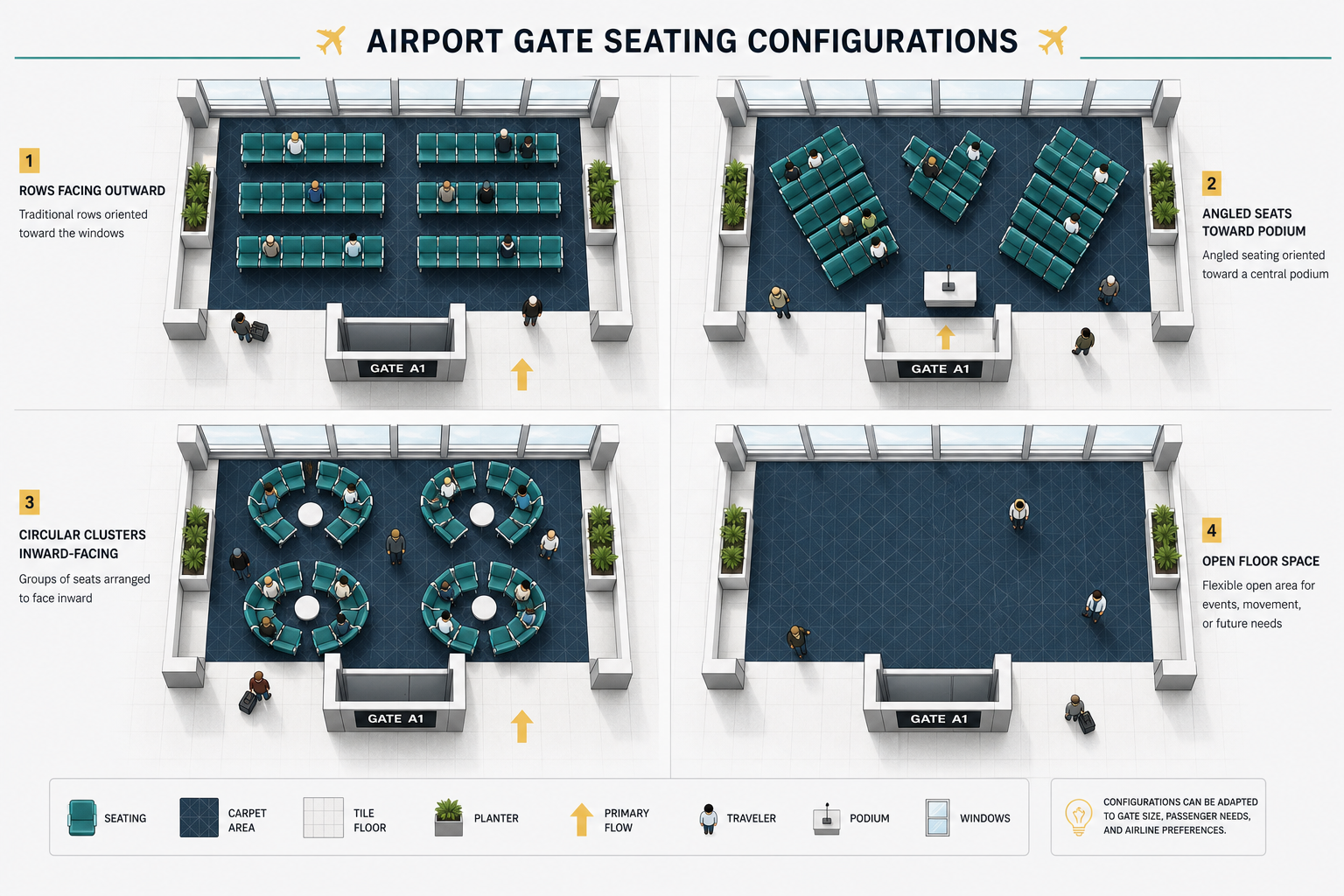
Walk up to most gates in the United States and you’ll find rows of chairs facing outward toward the windows, backs turned to the podium. This setup tells you everything about the American boarding philosophy: audio-driven, loudspeaker-dependent, passive waiting.
Gate agents will call your boarding group over the PA system. You don’t need to see the desk. You need to hear the announcement. While you wait, you’re meant to watch planes taxi, take off, and land. The tarmac becomes the entertainment.
Your strategy here is simple. Grab any seat with decent legroom. Keep one earbud out if you’re listening to music. When you hear your row called, stand up and join the line. No visual monitoring required.
Why This Works in the U.S.
American airports assume passengers will respond to audio cues. Gates rarely change last-minute. Boarding groups are announced clearly and repeatedly. The system banks on you listening, not watching.
European Gates: Angle Toward the Podium, Watch the Board
European airport gates arrange seating differently. Chairs angle toward the podium and the departure board. Some face the desk directly. Others create a semicircle that keeps the information displays in your sightline.
This orientation reflects a visual-first boarding culture. Group numbers flash on screens. Zone assignments update in real time. Gate agents often point to sections or hold up signs indicating which rows should approach. You need line-of-sight to the action.
Position yourself where you can see both the podium and the nearest screen without craning your neck. Europeans expect you to monitor visual cues and self-select when your zone is called. Miss the board update, miss your boarding window.
The Priority Boarding Dance
European airports also love priority lanes and specific boarding sequences. Those angled seats let you watch who’s lining up where, so you know when your turn approaches. It’s boarding as organized choreography, and you need to see the stage.
Asian Airports: Inward Clusters, Community Awareness
Many Asian airports, particularly in Japan, South Korea, and Singapore, arrange gate seating in inward-facing rows or circular clusters. Chairs point toward each other, creating small communities rather than isolated individuals staring at windows or screens.
This setup assumes passengers will self-organize. Travelers heading to the same destination naturally group together near the windows or specific zones. You become aware of your fellow passengers. You notice when people start gathering their bags. You sense the pre-boarding energy shift.
Here’s your move: join the cluster forming near your gate’s designated area. Pay attention to what other passengers are doing. When you see families with young children or passengers needing assistance start moving toward the desk, boarding is imminent. The community telegraphs the timeline.
Social Cues Over Announcements
These airports still make announcements, but the seating design encourages you to read the room. Are people standing? Forming a line? Checking their boarding passes? That’s your signal. The physical arrangement builds collective awareness.
Budget Terminals: No Fixed Seats, Stay Mobile
Some budget airline terminals, especially in Europe and Southeast Asia, provide minimal or zero fixed seating at gates. You’ll find open floor space, maybe a few benches, perhaps standing-height counters.
This isn’t poor planning. It’s intentional design for maximum flexibility. Budget carriers change gates frequently, sometimes minutes before boarding. Passengers need to move fast when reassignments happen.
Don’t get comfortable. Keep your bag packed and ready. Stay within sight of the departure board. When your gate posts or changes, you need to relocate immediately. These terminals reward mobility over comfort.
Reading Your Gate Like a Local
Next time you arrive at a gate, look at the seating before you sit down. The orientation tells you what the airport expects:
- Windows-facing: listen for audio announcements, any seat works
- Podium-angled: watch the screens and the desk, position for visibility
- Inward clusters: join your destination group, read social cues
- Minimal seating: stay light and ready to move
These arrangements aren’t arbitrary. They’re designed around regional boarding cultures, passenger behavior patterns, and operational philosophies. Once you recognize the system, you’ll navigate gate waiting with the same confidence as a frequent flyer on their home turf.
The next time someone asks why you’re sitting in a specific spot at the gate, you’ll have a much better answer than “it looked comfortable.” You’ll know exactly what you’re watching for and why it matters.