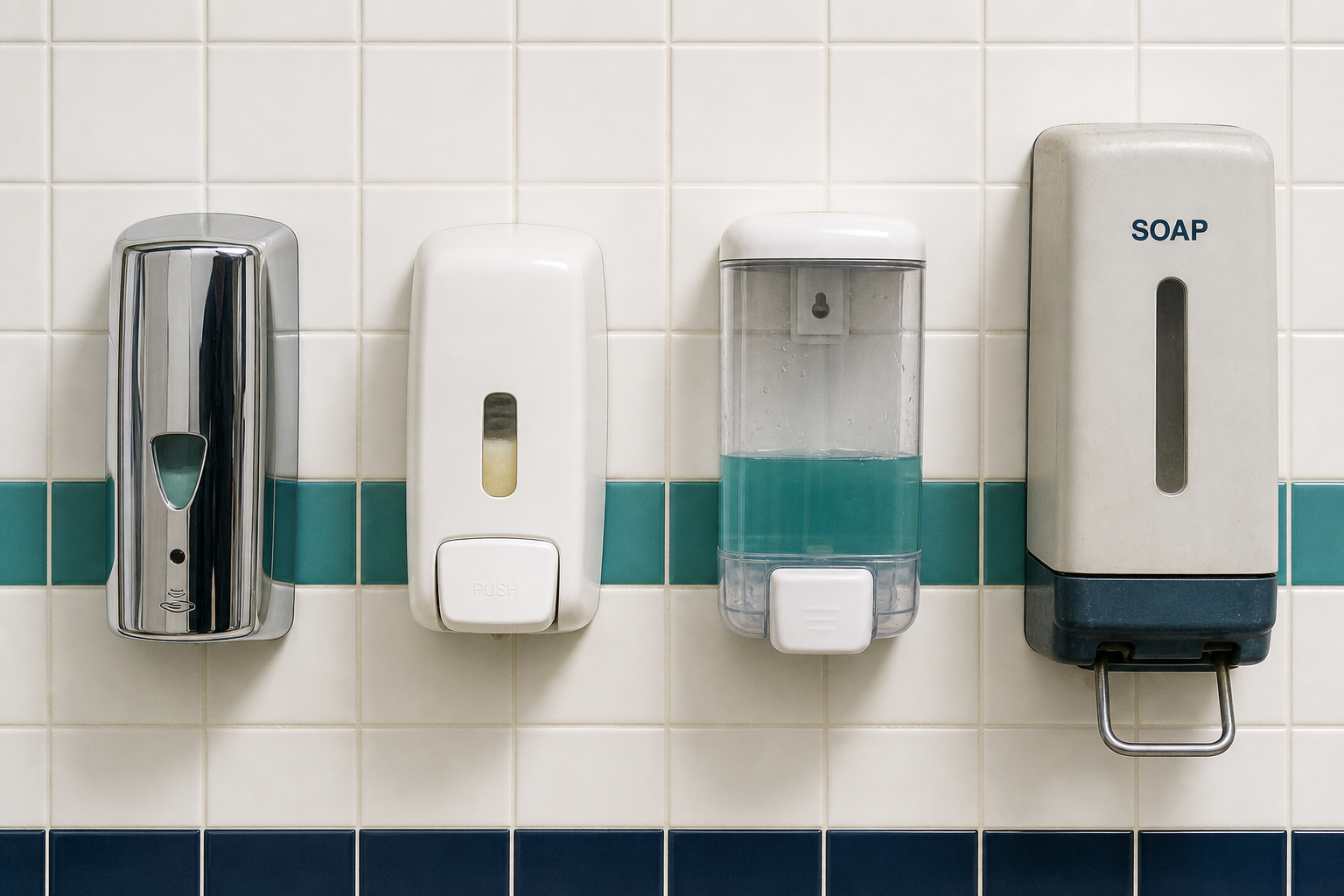
Why Airport Bathrooms Always Have Soap But Train Stations Don’t
You’re washing your hands in an airport terminal restroom, and the soap dispenser is nearly full. Two hours later, you’re at a train station, pressing the dispenser lever repeatedly, and nothing comes out. Same day, different venue, completely different soap reality.
This isn’t random. It’s strategy. The fullness of public restroom soap dispensers reveals exactly how facilities prioritize maintenance, and once you understand the pattern, you’ll know where to expect soap confidently and where to pack your own backup.
Airport Terminals: The 80% Rule
Airport restroom soap dispensers hover around 80% capacity, and there’s a reason for that consistency. Passenger volume is predictable. Airlines publish schedules, security queues generate data, and facilities teams know exactly when peak usage hits.
But the real driver isn’t just predictability. It’s accountability. When soap runs out in an airport, complaints travel up the management chain fast. Health concerns in a space where thousands of travelers pass through hourly create liability issues that facilities managers take seriously. Running out isn’t an option.
Airport restrooms operate on preventive service schedules. Staff refill dispensers before they’re empty, treating soap like a critical supply rather than a convenience. If you’re planning a long layover, airport restrooms are your reliable option.
Train Stations: The 30% Gamble
Train station bathrooms tell a different story. Dispensers hover around 30% full on average, sometimes lower. Usage spikes unpredictably because train schedules bunch passengers into short windows, then leave facilities empty for stretches.
Refill schedules at train stations assume minimum viable service, not peak demand. Maintenance teams calculate based on average daily usage, which means dispensers run low or empty during rush periods. The operating assumption is that some shortfall is acceptable given the volume fluctuations.
If you’re catching a train during morning or evening commute hours, don’t count on soap. Pack a small bottle of hand sanitizer or travel soap sheets. The infrastructure isn’t designed to keep up with surge demand.
Why the Gap Exists
Train stations often operate on tighter budgets than airports, with less direct revenue per visitor. Airports generate income from retail, parking, and fees that fund higher service standards. Train stations, especially in transit systems, run on fare revenue that barely covers operations, leaving soap refills in the reactive maintenance category.
Museums: Full Dispensers as Reputation Management
Museum restrooms maintain full soap dispensers consistently, and the reason is simple: visitor experience scores. Cultural institutions track cleanliness ratings closely because they compete for donations, memberships, and positive reviews.
Empty soap dispensers lower satisfaction scores directly. Museums know that a visitor who encounters an empty dispenser in an otherwise premium environment feels the contrast sharply. It undermines the overall experience in a way that matters to their funding and reputation.
If you’re spending the day at a museum, you can trust the facilities. These institutions prioritize preventive maintenance because their brand depends on it. Soap is part of the experience they’re selling.
Public Parks: Complaint-Driven Allocation
Public park restrooms sit at the opposite end of the spectrum. Dispensers often run empty until someone complains, and even then, refills happen on delayed schedules. The operating assumption is that outdoor visitors tolerate lower facility standards.
Park maintenance budgets spread thin across large areas, and restroom supplies compete with trail upkeep, landscaping, and safety priorities. Soap doesn’t make the urgent list unless complaints reach a threshold that forces action.
For park visits, carry your own supplies. Don’t expect soap, and you won’t be disappointed. Some parks with high-traffic visitor centers maintain better standards, but backcountry or neighborhood park facilities operate on minimal service models.
What This Means for Your Trip Planning
Understanding these patterns gives you practical intel for packing and expectations:
- Airports and museums: Trust the soap, but carry backup for long days
- Train stations and bus terminals: Pack hand sanitizer or travel soap as primary supply
- Public parks and outdoor facilities: Assume no soap, plan accordingly
- Shopping malls and hotels: Generally reliable, similar to airports in maintenance priority
The Bigger Pattern
Soap dispenser levels aren’t about negligence. They’re about budget allocation, liability assessment, and service philosophy. Facilities with predictable volume, direct accountability, or reputation stakes keep dispensers full. Facilities with unpredictable demand, tight budgets, or lower service expectations operate reactively.
Once you see the pattern, you stop being surprised and start being prepared. That small bottle of hand sanitizer in your day pack isn’t paranoia. It’s pattern recognition.
Next time you’re planning a trip, think about the venues you’ll visit and what their soap strategy likely looks like. Pack accordingly, and you’ll handle whatever dispenser reality you encounter.