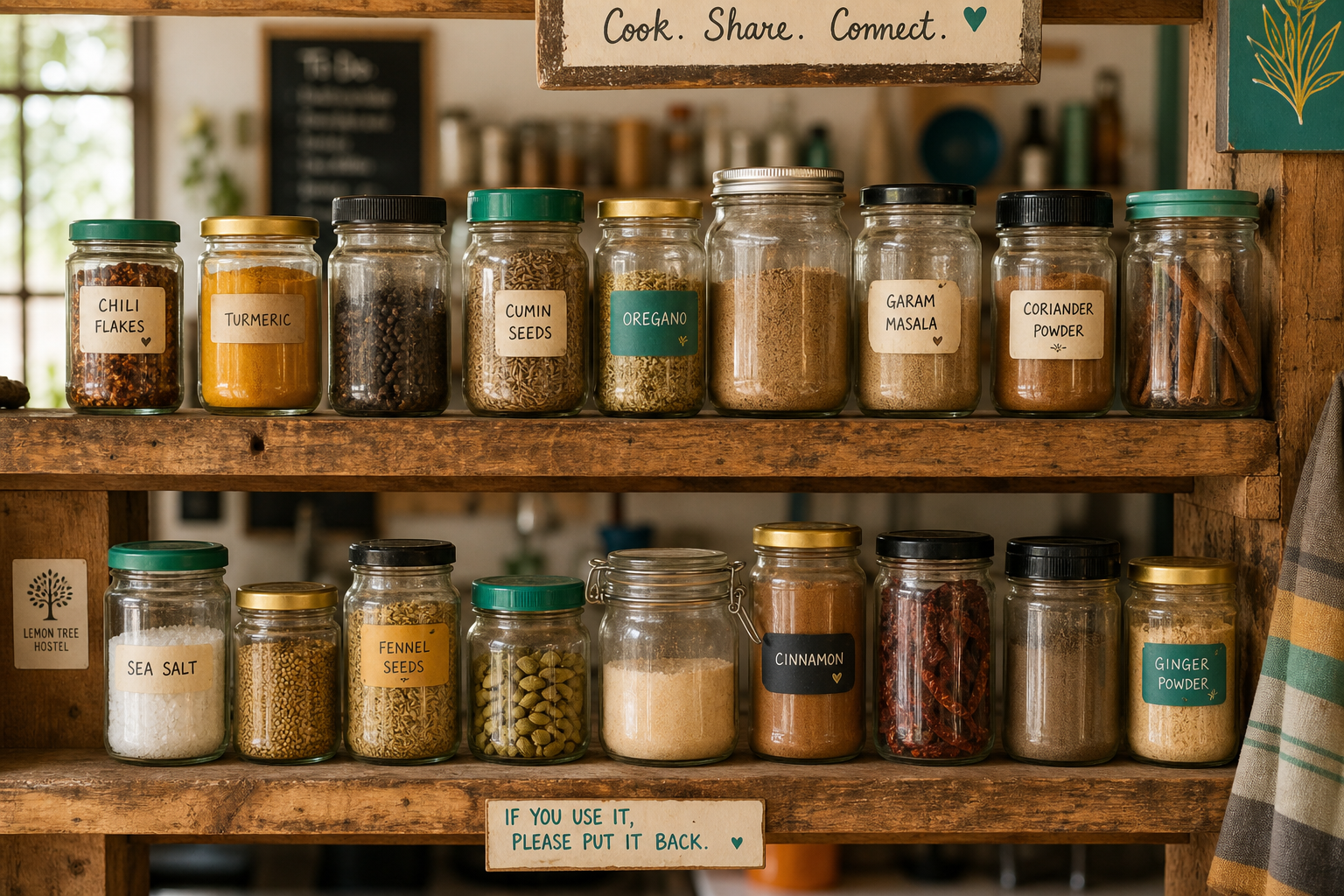
What Hostel Kitchen Spice Shelves Tell You About Backpacker Culture
You’re standing in a hostel kitchen somewhere between Sydney and Seoul, staring at the communal spice shelf, trying to figure out if you can grab that half-empty jar of paprika or if you’re about to commit a backpacker faux pas. Here’s the thing: that shelf isn’t random. It’s a mirror of the entire hostel’s social code, and learning to read it will save you awkward moments and help you cook better meals on the road.
The Australian Free-For-All: Chaotic Generosity
Walk into most Australian hostels and you’ll find spice shelves that look like a hurricane hit a grocery store. There are three different jars of cumin, two opened curry powders, and a mystery container that might be cinnamon or might be expired cocoa.
This isn’t neglect. It’s a philosophy.
Australian hostel culture runs on a take-what-you-need, leave-what-you-can principle. Travelers dump their leftover supplies before flying out, and everyone raids freely. Nobody labels anything because ownership is fluid. That half-jar of oregano? Fair game. The soy sauce with two tablespoons left? Use it.
The unspoken rule: take freely, but if you finish something and you’re staying a while, toss a replacement on the shelf when you can. Generosity flows in both directions, and abundance matters more than organization.
European Territory: The Room Number System
European hostels tell a different story. You’ll see shelves divided into sections, each labeled with room numbers or names written in permanent marker. The spices aren’t communal at all. They’re personal property stored in shared space.
This reflects a cultural priority: respect for individual ownership even in communal settings. Your paprika is yours. My turmeric is mine. We share the shelf, not the contents.
Touch someone else’s labeled spices and you’ve crossed a line. The system works because everyone understands the boundaries. If you want to cook, you bring your own supplies or ask permission before borrowing.
What to do here:
- Label everything you buy with your room number
- Store your spices in the designated area for your room
- Ask before using anything labeled, even if it looks abandoned
- Take your spices when you check out or explicitly leave them as communal
South American Collective: Staff-Managed Abundance
Many South American hostels take a third approach entirely. They maintain central spice racks stocked with basics: salt, pepper, oil, maybe some local favorites like aji or comino. Staff replenish these supplies regularly, and everyone uses them freely.
This isn’t just convenient. It’s social engineering.
Communal resources create natural interaction points. You’re using the same oil as the person next to you, which starts conversations. You notice when supplies run low and mention it to staff, creating a sense of shared responsibility. The hostel becomes a managed community rather than a collection of individuals.
The trade-off: you get basics, but specialty items are still your responsibility. Want that specific Thai curry paste? You’re buying it yourself. But for everyday cooking, the infrastructure supports you.
Asian Minimalism: Bring Your Own Everything
Step into many Asian hostels and you’ll find… nothing. Empty shelves. Maybe some salt packets if you’re lucky.
This isn’t stinginess. It’s a different calculation about waste and responsibility.
In regions where corner stores sell individual portions and ingredients come in small packages, the expectation is simple: buy what you need for tonight’s meal, use it all, waste nothing. Personal responsibility beats communal stockpiling.
This system also reflects space constraints and rapid turnover. Why maintain communal supplies when most travelers stay one or two nights and local markets sell everything in travel-friendly sizes?
Your strategy here: scout the nearest convenience store or market when you check in, buy small portions, and don’t expect leftovers to stick around if you leave them.
Reading the Room Before You Cook
These patterns aren’t absolute. You’ll find European-style labeled shelves in Bangkok and free-for-all abundance in Berlin. But the dominant pattern tells you something important about how that specific hostel community functions.
Look at the spice shelf on your first day. Is it chaotic and abundant? Labeled and territorial? Centrally stocked? Completely empty? That’s your roadmap for how to behave in that kitchen and what to expect from fellow travelers.
What This Means for Your Trip Planning
When you’re researching hostels, kitchen culture matters as much as bed comfort if you plan to cook your own meals. Read recent reviews looking for mentions of kitchen supplies and communal resources.
Pack accordingly:
- Heading to Australia or New Zealand? Bring minimal spices and plan to raid the shelf
- Europe-bound? Pack a small spice kit or budget for buying your own
- South America? Basics are covered, but bring specialty items
- Asia? Either pack everything or embrace buying fresh daily
The spice shelf is never just about spices. It’s about whether the community assumes abundance or scarcity, whether it protects individual property or builds collective resources, and whether it expects you to be self-sufficient or interdependent.
Next time you’re standing in that hostel kitchen, take a minute to read the shelf. It’ll tell you exactly how to fit into that temporary community and make the most of your time there. And honestly? Understanding these small social codes is what transforms you from a tourist into a traveler.