What Train Station Benches Tell You About Where to Wait
You’ve probably sat on dozens of train station benches without thinking twice about them. But next time you’re killing time before a departure, take a closer look. Those benches aren’t random. They’re engineered for specific purposes, and understanding their design tells you exactly what kind of waiting experience you’re in for.
Station benches reveal whether you should arrive two hours early with a good book or brace yourself for standing with your backpack pressed against a pillar. Here’s how to read the room.
Commuter Hubs: The Perch That Doesn’t Want You
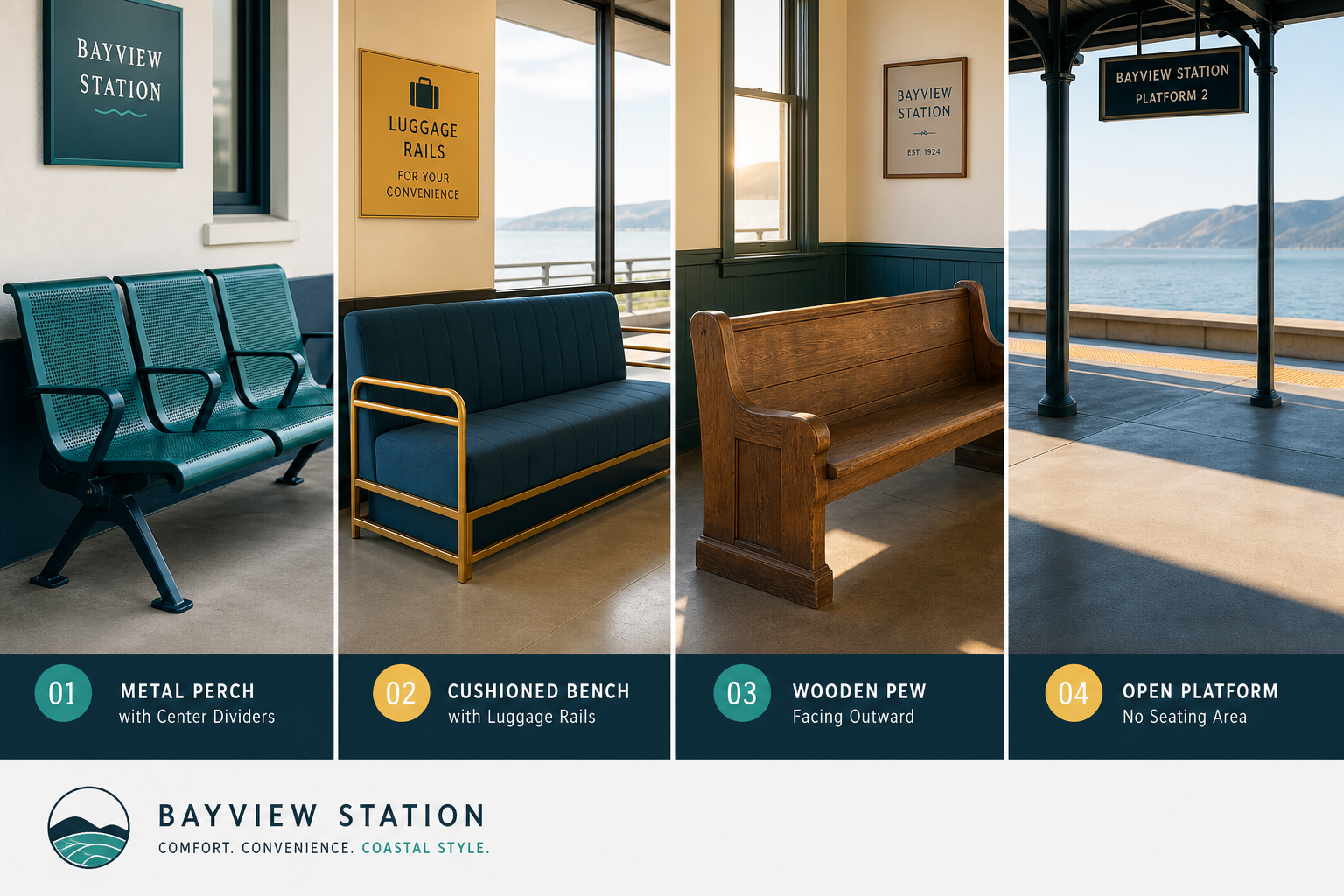
Walk into a major commuter station during rush hour and you’ll notice something immediately: the benches are almost hostile. Narrow metal or hard plastic perches, often with aggressive armrest dividers placed every 18 inches. These aren’t designed for comfort. They’re designed for turnover.
Commuter stations optimize for throughput. Thousands of people flow through every hour, most of them regulars who know their train times down to the minute. The station doesn’t want anyone settling in. Those armrest dividers serve dual purposes: they prevent anyone from lying down (a not-so-subtle homeless deterrence tactic) and they psychologically discourage lingering.
The message is clear. Get in, wait briefly, board, get out.
What this means for you: If you’re catching a train from a commuter hub, don’t plan on comfortable waiting. Arrive close to departure time. If you do show up early, scout out a coffee shop or find a spot to stand where you won’t block foot traffic. These stations assume you’re a regular, not a traveler with time to kill.
Tourist Terminals: The Lounge You Didn’t Know You Had
Tourist-oriented train stations tell a completely different story. The benches are wider, often padded, and they include something commuter stations never offer: dedicated space for your luggage right beside each seat.
Why? Because tourists arrive early. They’re unfamiliar with the station layout, nervous about missing connections, and hauling bags that don’t fit in overhead compartments. These stations expect prolonged waiting and design accordingly.
You’ll often find these benches arranged in clusters facing departure boards, sometimes with small tables between them. The entire setup says: settle in, we know you’re going to be here awhile.
What this means for you: Tourist terminals are your friend when you need buffer time. Show up an hour or two early if you want. Claim a bench, park your luggage, and actually relax before your journey. These stations are optimized for the anxious early arriver, which is exactly what most of us become when navigating unfamiliar rail systems.
Rural Stations: The Contemplative Wooden Pew
Small-town and rural stations often feature simple wooden benches that face directly toward the tracks. No armrest dividers, no fancy ergonomics, just long wooden pews that could have been borrowed from a church.
These exist because volume is low. There’s no throughput crisis to solve, no homeless population to deter, no throngs of tourists to accommodate. A few dozen people might use this station daily. The benches reflect that reality: they’re basic, functional, and designed for the quiet act of watching trains arrive.
There’s something almost meditative about these setups. You’re not being rushed or accommodated. You’re just… waiting. Watching the tracks. Present.
What this means for you: Rural stations are wildly unpredictable for amenities (bathrooms, food, shelter from weather), but they’re usually fine for actual sitting. If you’ve got a wait, you’ll probably find a decent spot. Just don’t expect much else. Bring snacks, bring layers, and embrace the slower pace.
Metro Transfer Points: The Bench That Isn’t There
And then there are metro transfer stations, where seating has been eliminated entirely. You stand. Period.
This isn’t an oversight. It’s intentional design prioritizing movement efficiency over passenger comfort. These stations calculate dwell time in seconds, not minutes. Seating would slow the flow, create bottlenecks, and reduce the number of people who can occupy the platform safely.
Some stations install narrow leaning rails, a compromise that takes weight off your feet without actually letting you sit. But most don’t bother. Standing is the default.
What this means for you: Don’t plan rest stops at metro transfer points. If you’re carrying heavy luggage and need a break, exit the system temporarily and find a cafe. These stations will not accommodate you, and fighting that reality just makes you tired and grumpy.
Reading the Bench, Planning the Wait
Once you start noticing bench design, you can’t unsee it. Every station broadcasts its priorities through these small infrastructure choices.
Here’s your practical takeaway:
- Commuter hubs: arrive on time, expect to stand or perch uncomfortably
- Tourist terminals: arrive early, claim a proper bench, relax
- Rural stations: decent seating, minimal everything else
- Metro transfers: no seating, keep moving, plan breaks elsewhere
The next time you’re planning a journey, think about what kind of station you’re dealing with. It won’t change your train time, but it will absolutely change how you approach your wait. And in travel, managing expectations is half the battle.
Know your benches. Plan accordingly. Your back will thank you.