What Your Rental Shower Drain Says About Host Trust
You walk into your vacation rental, toss your bags on the bed, and head straight for the shower after a long travel day. That’s when you notice it: a bright silicone flower sitting over the drain with a laminated note apologizing in advance for asking you to remove hair after each use. Or maybe there’s nothing at all, just a pristine, gleaming drain that somehow feels like a test. Welcome to the unspoken language of rental shower drains.
Different regions approach shower drain protection with wildly different philosophies, and these tiny bathroom details reveal exactly how much your host trusts you, what they expect to go wrong, and how carefully you need to clean before checkout.
The American Apologetic Approach
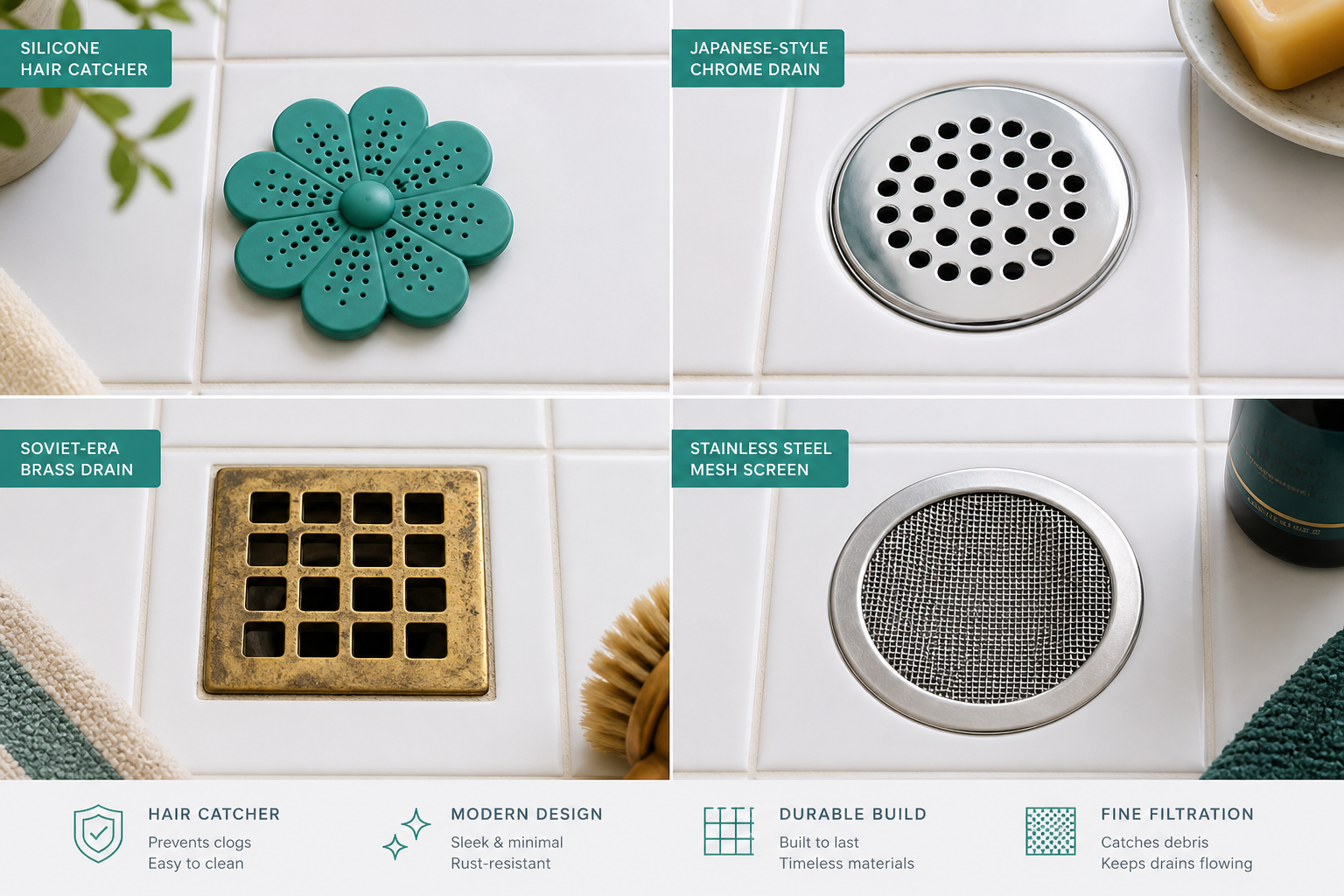
American Airbnbs have perfected the art of pre-emptive plumbing defense. Walk into most U.S. rentals and you’ll find silicone hair catchers, often shaped like flowers or starbursts, sitting prominently over every shower drain. They come with notes. Lots of notes.
“We kindly ask that you remove any hair from the catcher after showering!” reads one version. “Just trying to avoid expensive plumber visits, thank you for understanding!” says another. Some hosts leave backup catchers under the sink, as if one might disintegrate under the strain.
This approach assumes guests will shed, and that’s okay. American hosts have accepted hair loss as inevitable and engineered around it. The apologetic tone reveals something deeper: hosts want to prevent problems without seeming accusatory. They’re managing expectations while distributing responsibility.
What this means for checkout: Remove visible hair from the catcher and wipe down the shower walls. American hosts expect basic tidiness but have already planned for imperfection. They won’t inspect with white gloves.
The Japanese Bare Drain Philosophy
Japanese vacation rentals take the opposite approach. No hair catchers. No notes. Just an immaculate drain that looks like it was installed yesterday, even if the building dates back decades.
This isn’t an oversight. It’s a statement about mutual respect and cleanliness standards. Japanese rental culture operates on the assumption that guests will maintain the space exactly as they found it. Adding a hair catcher would imply the host expects you to be messy, which would be insulting to both parties.
The pristine drain isn’t just clean. It’s a mirror. It reflects back the exact standard you’re expected to maintain. Every guest before you left it this way. You will too.
What this means for checkout: Wipe every surface, remove every strand of hair, squeegee the walls, and leave the bathroom drier than you found it. Japanese hosts don’t just expect cleanliness. They expect you to erase all evidence of your presence. Budget extra time for bathroom cleanup before you leave.
The European Self-Management Model
European rental apartments, particularly in older buildings across former Soviet-influenced regions, often feature metal drain grids that look like they’ve been there since the 1970s. Because they have.
These perforated metal circles catch almost nothing. Hair slides right through the holes. Soap scum accumulates in the corners. They’re not engineered solutions so much as architectural formalities, something that came with the building and nobody bothered to upgrade.
This approach reveals a different trust model entirely: you’re an adult, you’re renting the space, you’ll deal with whatever happens. European landlords, especially in longer-term rentals, assume tenants will handle their own clogs, call their own plumbers if needed, and generally manage the consequences of their choices.
It’s not neglect. It’s autonomy. You wanted an apartment? Here’s an apartment. Maintain it accordingly.
What this means for checkout: Clean what’s visible, but don’t stress about deep drain maintenance unless your rental agreement specifically addresses it. European hosts expect you to leave the place generally tidy but understand that old buildings have old plumbing. Just don’t leave a clog you created.
The Australian Engineering Solution
Australian beach rentals don’t mess around. After hosting countless surf trips, beach weekends, and sandy holiday groups, Australian hosts have learned that standard hair catchers are adorably inadequate.
Enter the industrial mesh covers. These aren’t delicate silicone flowers. They’re heavy-duty stainless steel or reinforced plastic grids designed to handle sand, salt water, long hair, short hair, and whatever else gets dragged in from the beach. Some look like they belong in a commercial kitchen.
This approach acknowledges reality without judgment. Australian beach rentals see high volume and high debris. The industrial catchers aren’t accusations. They’re infrastructure investments that say, “We know what happens here, and we’ve planned accordingly.”
What this means for checkout: Rinse the catcher thoroughly and remove obvious debris, but Australian hosts with industrial solutions have already accepted that beach rentals require serious cleaning between guests. They’re not expecting you to restore showroom conditions. Just don’t leave a sand castle in the drain.
Reading Your Rental’s Real Expectations
The shower drain situation in your vacation rental isn’t random. It’s a tiny window into host philosophy, regional cleaning standards, and what your checkout routine should actually involve.
- Apologetic notes and backup catchers mean your host wants to prevent problems but won’t blame you for being human
- Pristine bare drains signal high mutual standards and serious checkout cleaning expectations
- Old metal grids suggest you’re trusted to manage your own space like an adult
- Industrial mesh means your host has seen everything and engineered for reality
Next time you check into a rental, take a moment to decode the drain situation. That little piece of bathroom infrastructure will tell you exactly how much trust your host has placed in you, and how much effort you need to put into leaving the space ready for the next guest.
Because in the end, vacation rental showers aren’t just about getting clean. They’re about understanding the unspoken contract between host and guest, one hair catcher at a time.