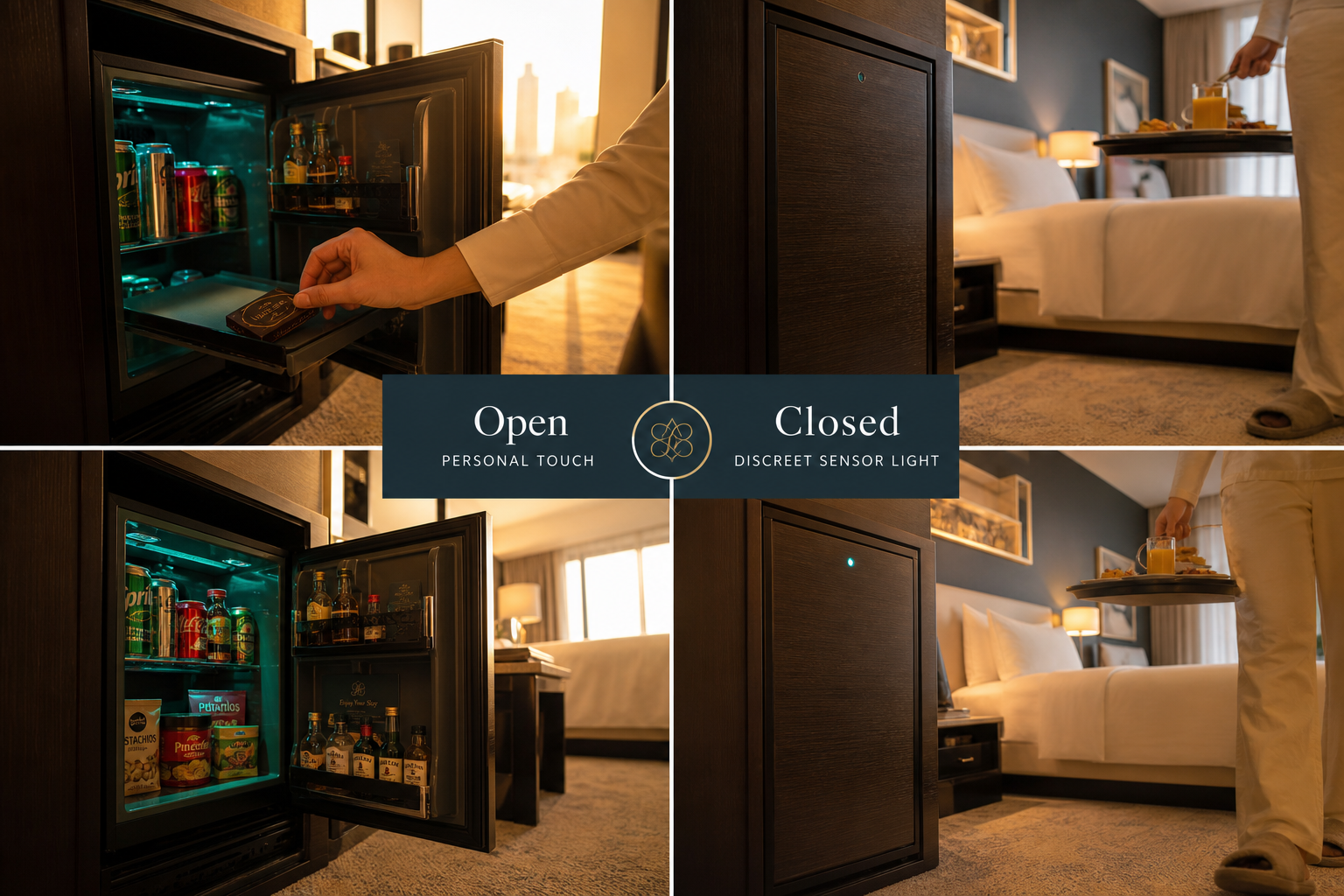
Hotel Minibar Restocking Schedules Reveal Privacy Priorities
You’re settling in for the evening, maybe changing for dinner or video-calling home, when you hear the knock. “Turndown service!” It’s 7pm, and someone wants into your room. Or maybe you check out after three nights and only then does anyone ask about your minibar. Or you return from breakfast to find snacks mysteriously replenished, though you never heard a soul. What’s going on?
Hotel minibar restocking schedules aren’t random. They reveal fundamental differences in how properties balance guest service against privacy, and understanding these patterns helps you know exactly what to expect when you check in.
American Hotels: The Visible Service Model
Most American hotels restock minibars during turndown service, typically between 6pm and 8pm. You’ll get a knock, a cheerful greeting, and someone who wants to fluff your pillows, close your curtains, and yes, peek inside that minibar.
This timing prioritizes convenience and visible hospitality over uninterrupted privacy. The philosophy? Guests expect to see their hotel taking care of them. An evening check means you can grab that overpriced bottle of water for your nightstand, and the hotel captures revenue before you check out tomorrow.
It also means you should expect interruptions during what many travelers consider private wind-down time. If you’re the type who values sanctuary after a day of meetings or sightseeing, hang that “Do Not Disturb” sign early. The trade-off is real: accessible snacks versus uninterrupted space.
What This Means for Your Stay
Plan your evening routine knowing someone may knock. If you’re changing clothes, on a call, or simply want solitude, use the door hanger. Staff genuinely won’t be offended. They’ll catch you tomorrow, or check the minibar at checkout if you’ve declined service all week.
European Business Hotels: Checkout-Only Checks
Many European hotels, particularly business properties in cities like London, Frankfurt, and Copenhagen, take a completely different approach. They check minibars only when you check out.
This model reflects a cultural priority: room sanctity matters more than snack availability. There’s also an element of trust. Hotels assume you’ll report what you consumed, or they’ll verify against the inventory when you leave. The result? Zero interruptions during your stay.
You won’t get evening knocks. You won’t return from dinner to find someone’s been in your space. Your room remains yours from check-in to checkout. The trade-off here runs the other direction: if you empty the minibar on day one, it stays empty unless you call housekeeping.
Adapting Your Expectations
If you’re used to American-style service, this hands-off approach might feel surprising at first. Stock up on snacks if you’re a grazer, because that minibar won’t magically refill. On the flip side, your privacy remains genuinely protected. No need to worry about awkward timing or whether to tip someone who’s just checking inventory.
Japanese Hotels: The Invisible Service Standard
Japanese hotels have engineered something remarkable: minibars that restock themselves. Or rather, they restock while you’re reliably elsewhere.
Staff refresh minibars during breakfast hours, typically between 7am and 9am, when most guests are in the dining room. They use master logs tracking what each room consumed yesterday, so they know exactly what to replace before you return. You leave for breakfast with two waters and a juice missing. You return to find two waters and a juice back in place. You never saw anyone. You never heard the door.
This approach defines Japanese hospitality: anticipating needs without intrusion. Service should be invisible, seamless, almost telepathic. The guest experiences the result without witnessing the work.
What to Know
If you skip breakfast or work in your room during morning hours, you might actually encounter this normally-invisible service. Don’t be startled. Staff will be exceptionally apologetic about the interruption, even though they’re just doing their job. The system works because most guests follow predictable patterns, and hotels design service around those rhythms.
Budget Chains: Sensor Technology Replaces Human Touch
Many budget and mid-range chains globally have eliminated daily minibar checks entirely. They’ve installed sensor technology that pings the front desk the moment you lift that Kit Kat.
The reason is purely economic: labor costs exceed minibar revenue. Why pay someone to knock on 200 doors when a sensor can track consumption automatically and add charges to your bill in real time?
You get maximum privacy because nobody’s checking anything. You also get zero human interaction around this particular service. The minibar becomes a vending machine that happens to live in your room. Items don’t get restocked during your stay unless you specifically request it, and even then, you’re usually just pointed toward the snack display in the lobby.
The Privacy-Service Trade
This model offers complete privacy by default, but it’s privacy born from cost-cutting rather than cultural priority. You won’t be interrupted, but you also won’t experience the thoughtfulness of invisible restocking or the option of evening service. It’s efficient, impersonal, and increasingly common.
Reading Your Hotel’s Priorities
These restocking schedules tell you immediately what your hotel values:
- Evening knocks mean visible attentiveness matters more than privacy
- Checkout-only checks mean undisturbed space trumps convenience
- Silent morning restocks mean invisible service defines hospitality
- Sensor technology means efficiency has replaced human service entirely
None of these approaches is inherently better. They reflect different cultural priorities and business models. But knowing what to expect helps you choose properties that match your preferences and adjust your routine accordingly.
Planning Around Service Patterns
When you’re booking, especially for longer stays, consider which model suits your travel style. Do you want someone checking in on you, even if it means interruptions? Do you value privacy enough to sacrifice convenience? Do you appreciate invisible service, or does it feel impersonal?
Most hotel websites won’t spell out their minibar restocking philosophy, but you can infer it from location and category. American full-service hotels will likely knock in the evening. European business hotels probably won’t touch your minibar until you leave. Japanese properties will restock invisibly. Budget chains will let sensors do the work.
And if you have strong preferences? The front desk can usually accommodate. Request no turndown service if you want privacy. Ask for morning minibar checks if you want restocking without evening interruptions. Most hotels will note your preference and adjust.
The minibar restocking schedule is a small detail that reveals big priorities. Pay attention, and you’ll know exactly whether to expect that door knock during dinner prep, or whether your room stays yours until checkout.