Pharmacy Counter Bells and What They Tell You About Patient Expectations Abroad
You’re standing at a pharmacy counter in London, prescription in hand, and nobody has looked up. There’s no bell. Do you clear your throat? Wait silently? You glance around and notice everyone else standing patiently, so you do the same. Three minutes later, the pharmacist finishes what they’re doing and acknowledges you with a nod. You’ve just encountered a cultural script written in the absence of a bell.
Counter bells aren’t just about getting attention. They’re tiny pieces of infrastructure that encode expectations about how patients should advocate for themselves, whether waiting is a courtesy or an imposition, and who controls the pace of service. When you travel, pharmacy bell placement (or lack thereof) tells you exactly how to behave when you need medication abroad.
American Pharmacies: The Bell Means Ring It
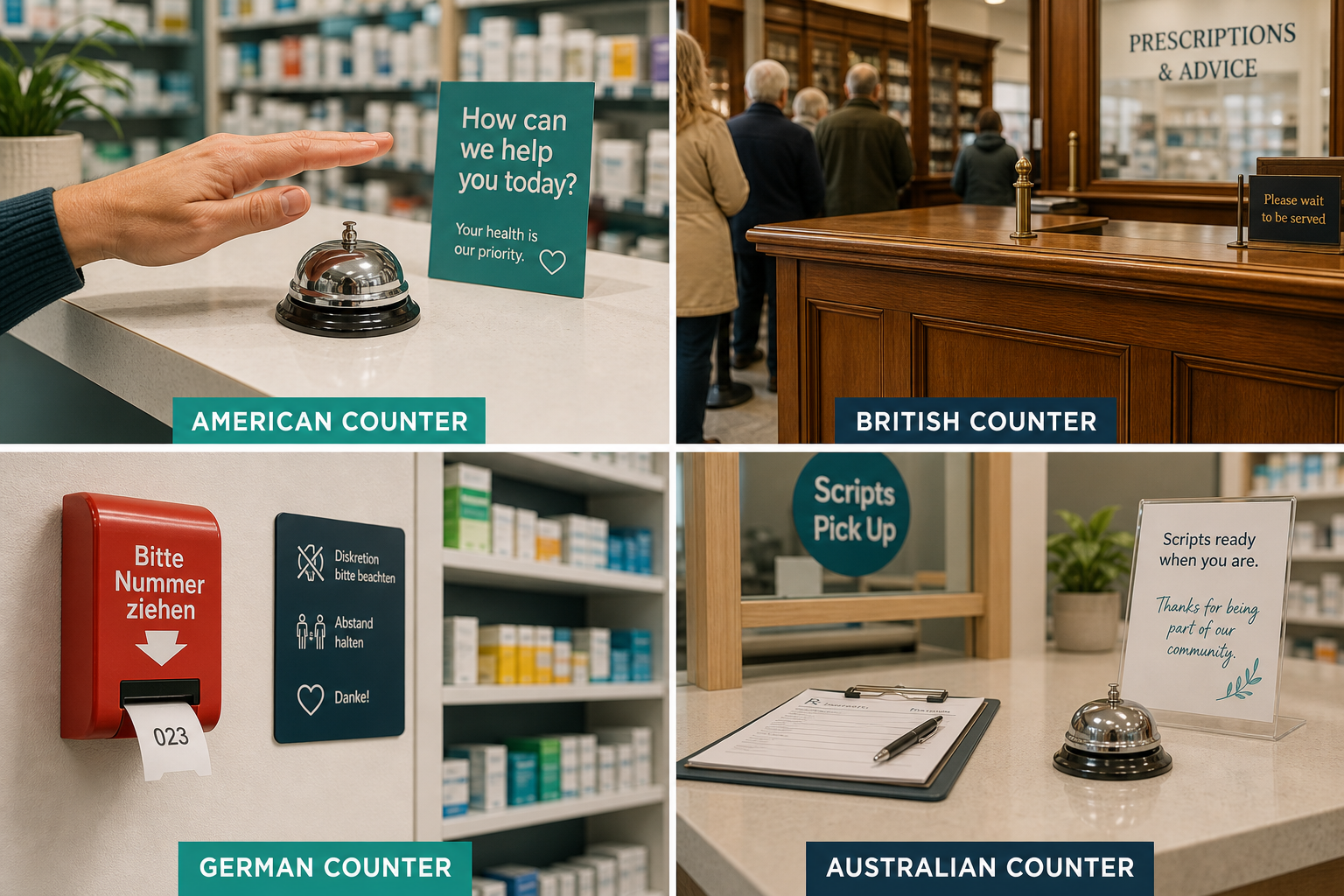
Walk into a CVS or Walgreens in the United States and you’ll find a bell mounted directly on the counter, often with a sign that says “Ring for Service.” It’s an invitation, not a suggestion.
American pharmacy culture assumes customers will self-advocate. If the pharmacist is in the back counting pills or consulting with another patient, you’re expected to ring. Nobody considers this rude. The bell exists because the system anticipates that you’ll make your presence known rather than wait indefinitely. Staff appreciate the signal. Customers expect immediate acknowledgment, even if it’s just “I’ll be right with you.”
This reflects broader American service expectations: vocal requests are normal, and systems are built around customers initiating the interaction.
British Chemists: The Invisible Bell
In the UK, bells are often tucked under the counter or missing entirely. You’re supposed to queue silently and wait for the pharmacist to finish what they’re doing before they acknowledge you.
Ringing a bell in a British chemist, if one even exists, feels aggressive. The cultural script says that standing patiently is the polite move. The pharmacist will notice you when they’re ready, and jumping the queue or demanding attention disrupts the social order.
This isn’t about poor service. It’s about courtesy as waiting. The system assumes you understand that healthcare professionals are busy, and your patience signals respect for their workflow. When the pharmacist does look up, the interaction is warm and attentive, but you earned that attention by waiting properly.
What This Means for Travelers
If you’re visiting a UK pharmacy, resist the urge to announce yourself. Stand where you’re visible, make brief eye contact if the pharmacist glances up, and wait. They’ll get to you. Ringing a bell or saying “Excuse me” too quickly marks you as impatient.
German Apotheke: Take Your Number
German pharmacies often skip bells entirely and use numbered ticket dispensers instead. You pull a ticket when you enter, glance at the display screen showing the current number being served, and wait for yours to appear.
This system removes ambiguity. There’s no question about who’s next, no awkward dance of “were you here first?”, and no need to advocate loudly or wait politely. The technology engineers fairness. Queue jumping becomes impossible, and everyone knows exactly where they stand.
German pharmacy culture values orderly systems over personal negotiation. The ticket dispenser reflects a broader preference for rules that prevent conflict rather than social norms that require you to read the room.
Practical Tip
When you walk into a German apotheke, look for the ticket machine immediately. It’s usually near the entrance. Take your ticket, note your number, and find a seat or browse. When your number appears on the screen, approach the counter. The pharmacist will be ready for you.
Australian Pharmacies: Bells Only Where You Ask
Australian chemists often place bells near the prescription drop-off counter but not at the pickup counter. The logic: lodging a script requires staff attention because you need to hand over paperwork and discuss timing. Collecting your medication assumes you can wait because the pharmacist will call your name when it’s ready.
This split system distinguishes between active requests (“I need help now”) and passive collection (“I’m here when you’re ready”). The bell appears only where immediate interaction is necessary. At pickup, you’re expected to hover near the counter or sit in the waiting area until you hear your name.
How to Navigate It
When dropping off a prescription at an Australian pharmacy, ring the bell if no one is at the counter. When picking up, wait for your name to be called. If it’s been longer than expected, a polite “I’m here to collect for [your name]” works fine, but don’t ring the bell at the pickup counter. There isn’t one.
Why Bell Placement Matters for Travelers
Pharmacy interactions seem minor until you’re jet-lagged, feeling unwell, and standing at a counter unsure whether to speak up or stay silent. Bell placement gives you a read on the local script before you commit a cultural misstep.
Here’s your cheat sheet:
- Bell on the counter: Ring it. The system expects you to initiate.
- No visible bell: Wait silently. Patience is the expected courtesy.
- Ticket dispenser: Take a number. The technology handles the queue.
- Bell at drop-off only: Ring when lodging scripts, wait when collecting.
Reading the Room When Rules Aren’t Clear
Not every pharmacy fits neatly into these patterns. Smaller independent chemists might blend systems, and tourist-heavy areas sometimes adapt to international expectations.
When in doubt, watch what locals do. If everyone is standing silently, join them. If people are ringing bells without hesitation, follow suit. If there’s a ticket system, use it. The goal isn’t to guess the rules perfectly but to recognize that the infrastructure itself is giving you clues.
The Takeaway
Counter bells are tiny cultural artifacts that reveal big expectations about patience, advocacy, and fairness. American bells say “speak up,” British silence says “wait your turn,” German tickets say “trust the system,” and Australian split-placement says “ask when you need, wait when you don’t.”
Next time you’re traveling and need a pharmacy, glance at the counter. The bell (or lack of one) will tell you exactly how to behave. And if you’re ever unsure, a friendly “How does the queue work here?” is never wrong.