What Cafe Table Wobbles Tell You About Local Service Culture
You sit down with your coffee, set your cup on the table, and watch the dark liquid slosh gently to one side. The table wobbles. What happens next depends entirely on where you are.
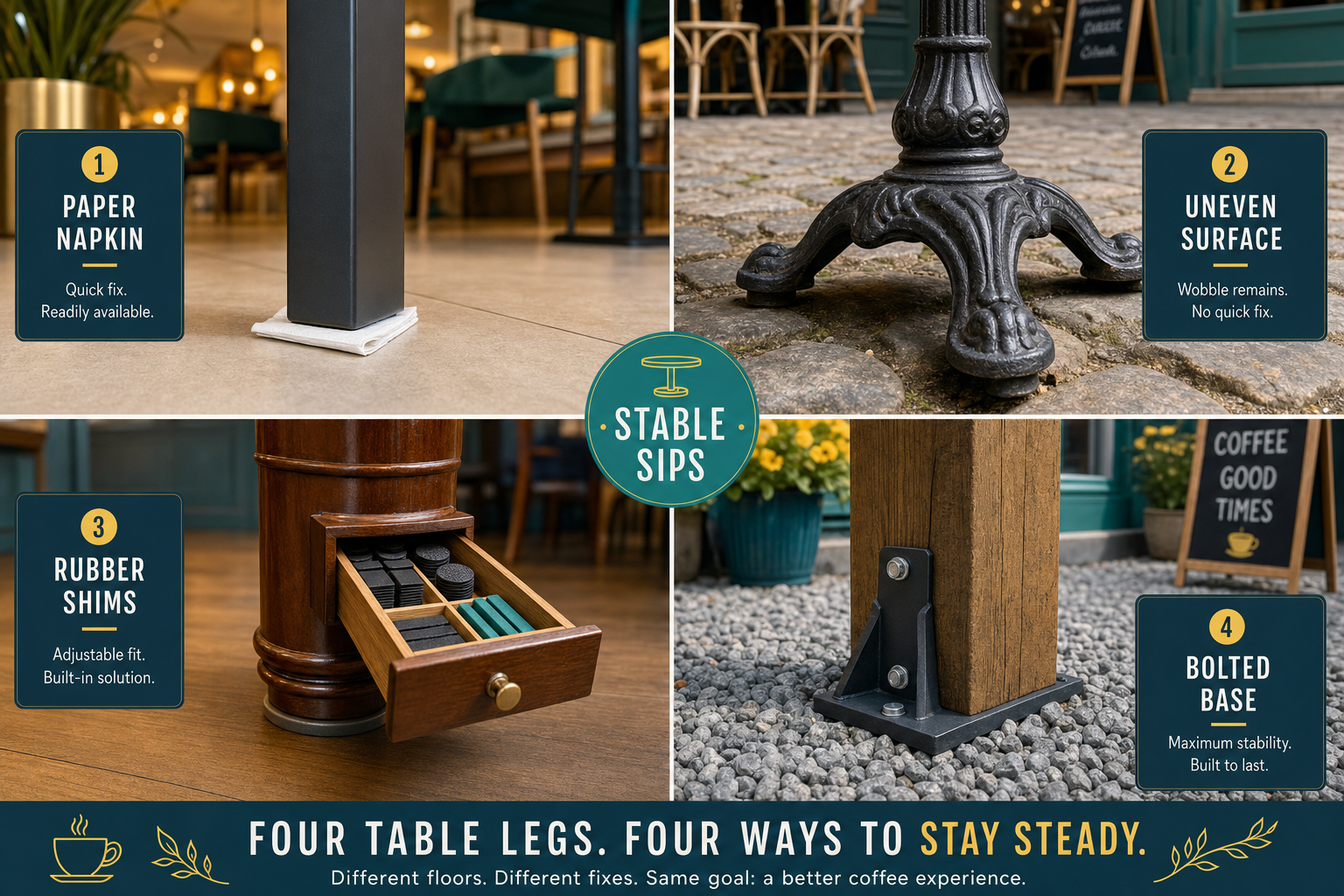
In an American coffee shop, you’ll probably grab a napkin, fold it into quarters, and wedge it under the short leg yourself. In a Parisian bistro, you’ll sip your espresso at a slight angle and think nothing of it. In a Tokyo kissaten, you might discover a small drawer built into the table containing pre-cut rubber shims in three different thicknesses. In a Munich biergarten, your table won’t wobble at all because it’s bolted directly into the gravel.
These aren’t random differences. They’re tiny windows into how different cultures think about service, maintenance, and whose job it is to fix everyday problems.
American Coffee Shops: The Napkin Wedge Economy
Walk into most American cafes and you’ll notice something: wobbly tables are acknowledged problems, but they’re solved by customers, not staff. The folded napkin under the table leg is so common it’s practically a national reflex.
This approach reveals a specific service philosophy. American establishments prioritize quick turnover and customer self-sufficiency. The napkin solution works because it’s instant, requires no tools, and doesn’t interrupt the flow of service. Staff are focused on taking orders and delivering drinks, not crawling under tables with Allen wrenches.
The cultural assumption here is clear: minor inconveniences are yours to solve. The cafe provides the materials (napkins are always available), but the fix itself is DIY. It’s the same logic behind self-bussing stations and condiment bars. You’re expected to handle small problems yourself so staff can focus on core service.
What This Means for Travelers
Don’t wait for someone to fix your wobbly table in American cafes. Grab napkins, sugar packets, or whatever’s handy and wedge away. Staff won’t be offended. They’re expecting it.
French Bistros: Wobbles as Ambient Character
Parisian cafe tables wobble. They wobble on centuries-old cobblestones, on uneven sidewalks, on floors that have settled and shifted since before your grandparents were born. And largely, no one cares.
The French approach to table stability is to simply not treat it as a problem requiring a solution. Uneven surfaces are part of the environment, like weather or traffic noise. You wouldn’t complain about the angle of afternoon sunlight, would you? The wobble is ambient.
This isn’t negligence. It’s a different definition of what matters. French service culture emphasizes atmosphere, conversation, and the quality of what you’re consuming over the engineering precision of your seating. A wobbly table on a charming terrace overlooking the Seine isn’t a maintenance failure. It’s proof you’re sitting somewhere with history.
What This Means for Travelers
Accept the wobble. Trying to fix it yourself might work, but you’ll likely be the only person at the cafe who seems bothered. The locals around you are deep in conversation, completely unbothered by their gently rocking espresso cups. Join them.
Japanese Kissaten: Problems Solved Before You Notice Them
In traditional Japanese coffee houses, you might discover something remarkable: a small drawer built into the table structure. Inside, you’ll find rubber shims in multiple thicknesses, sometimes even small wooden wedges, all precisely cut and ready to use.
This is preventive hospitality at its finest. The establishment has already anticipated the problem, considered the solution, and provided the tools before you even thought to ask. The drawer is discreet because drawing attention to the fix would acknowledge the imperfection, which would create social awkwardness for everyone involved.
Japanese service culture operates on the principle that guest comfort should require zero effort from the guest. You shouldn’t have to ask, improvise, or even think about problems. They should be solved silently, often before they occur.
What This Means for Travelers
Before you flag down staff about any minor issue in Japan, look around carefully. Check under the table, peek in any small drawers or compartments, examine the edges of your seating area. The solution is probably already there, placed specifically so you can help yourself without creating a service interaction.
German Biergartens: Engineering Over Flexibility
German beer garden tables don’t wobble. They can’t. They’re bolted directly into the gravel, sometimes set in concrete footings, engineered for absolute stability even when a dozen people are leaning on them with full steins.
This approach prioritizes permanence and reliability over flexibility. These tables aren’t meant to be moved for different party sizes or rearranged for events. They’re infrastructure, built to last decades and withstand heavy use without maintenance.
The cultural assumption is that doing something right once is better than doing it quickly or flexibly. A properly installed table should never need adjustment, never require customer intervention, and never create service interruptions. The engineering investment up front eliminates ongoing maintenance.
What This Means for Travelers
Your beer will sit level. Always. Don’t expect tables to move, though. In traditional biergartens, you sit where there’s space, often sharing long communal tables. The seating is fixed, and so is the social expectation that you’ll squeeze in wherever there’s room.
Reading the Room (or the Table)
These stabilization strategies tell you something deeper than just how to handle a wobbly table. They reveal whether you’re in a culture that expects customer self-service, embraces imperfection as atmosphere, prevents problems proactively, or engineers permanence over flexibility.
Knowing which approach to expect helps you navigate cafes like a local. You’ll know whether to grab napkins yourself, settle in and ignore the wobble, check for hidden solutions, or simply trust that your table is rock-solid.
Next time you sit down and feel that telltale rock, pay attention to what happens next. That wobble is telling you exactly how this place thinks about service, and exactly what role you’re expected to play in your own comfort.